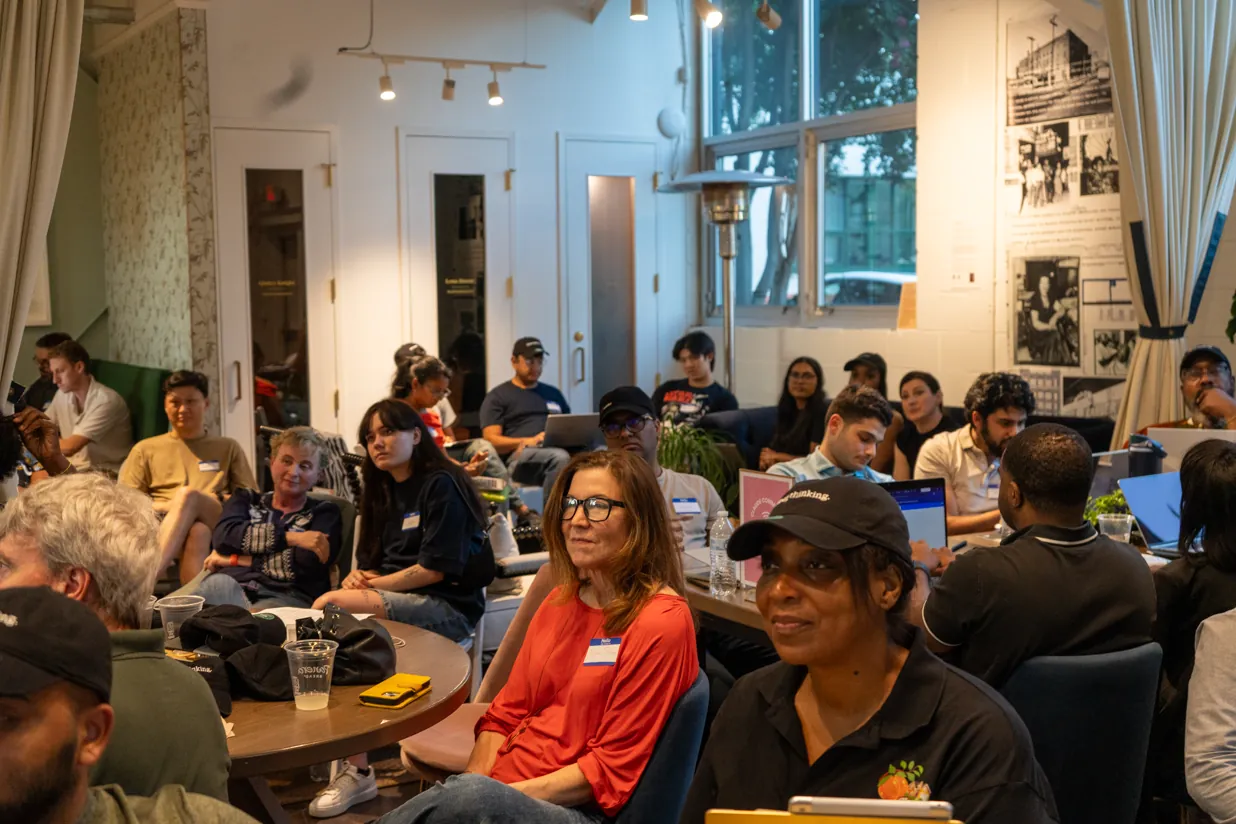
Claude Impact Lab Atlanta: about thirty pitches, three problems, one room.
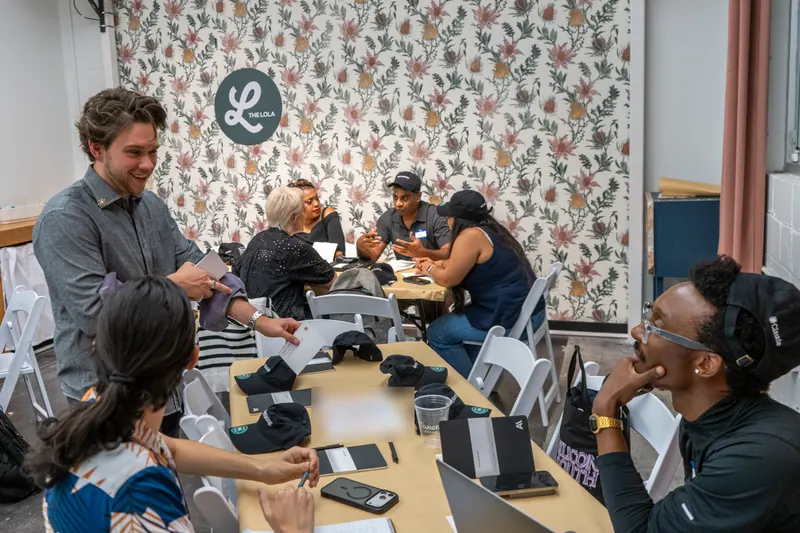
The Claude Impact Lab was a free Claude Community Atlanta build night on Wednesday, August 12, 2026, hosted by Tyler Sztuka, Atlanta's volunteer Claude Community Ambassador. More than 100 people came. About 30 of them pitched an idea in 60 seconds each, aimed at one of three problems named at the August 3 Claude Community Conversation, and the room formed its own teams to build them.
More people came than the plan expected.
The run of show was built for 60 to 80 people and capped the pitch board at 24. Both numbers were passed, and the format held.
Three problems, named by the room nine days earlier.
The Impact Lab was the second of two nights. On August 3, a Claude Community Atlanta Conversation put one question to the room: what is AI doing to me, my kids, my community? Small groups worked through it on hopes-and-fears cards and table worksheets. Critical thinking surfaced on its own at separate tables, and education and kids ran through every table's notes. Those notes became three problem statements, sent to everyone before the Lab.
Critical thinking
Students and teachers struggle to keep critical thinking at the center of learning because technology stays steps ahead of schools and students, and today they spend more time and money assessing comprehension instead of redesigning for it.
Guardrails for kids
Kids struggle to use AI safely because the tools they reach for are built for adults and no standard exists for what good use looks like at a given age, and today parents and schools each set their own rules, one household and one classroom at a time.
Access
Under-resourced Atlanta communities struggle to get to AI at all because capability is tiered, access is gated behind cost, and the on-ramp is intimidating, and today they fall further behind while the jobs change.
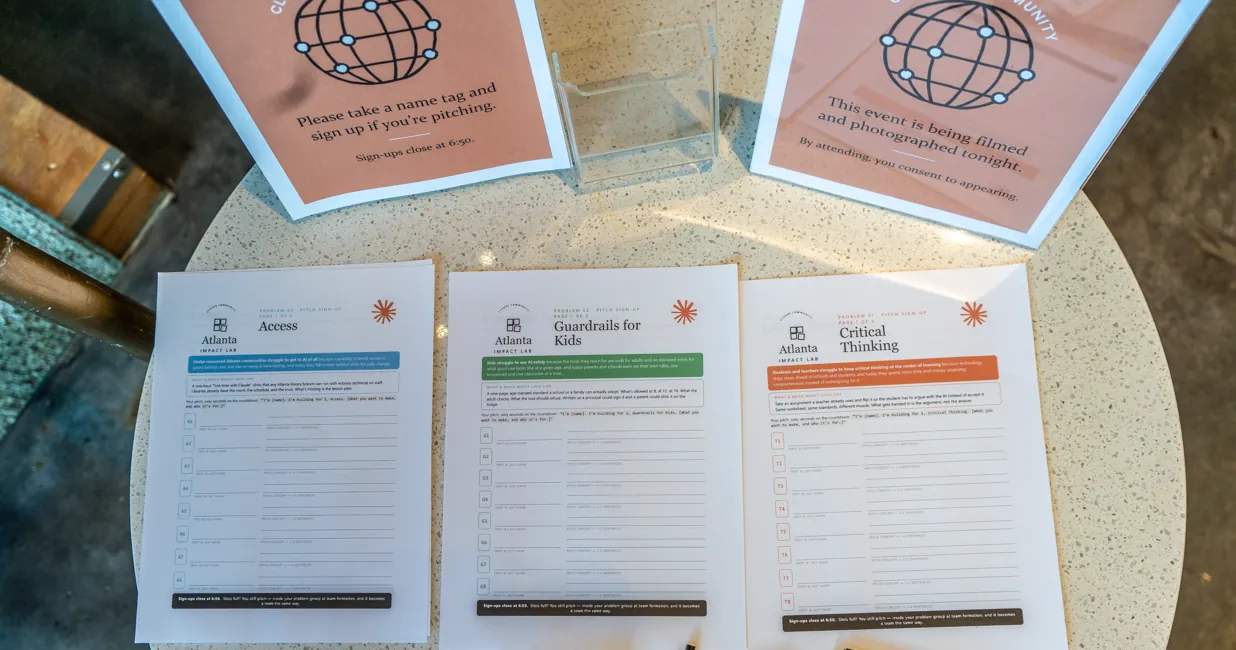
Pitch, recap, then let the room sort itself.
No slides and no decks. The output of the night was teams, not products.
-
6:00 · Doors
Sign up to pitch
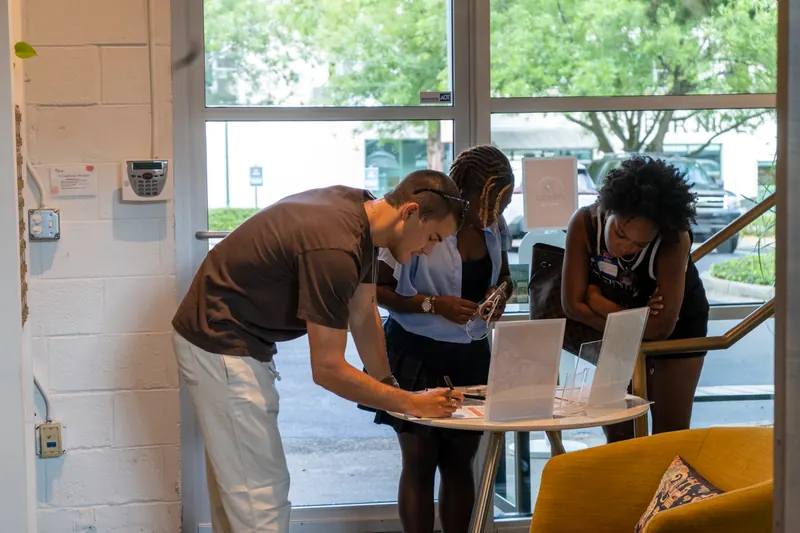
Everyone picked up a name tag. Anyone who wanted to pitch wrote their name and one line about their idea on the sheet for their problem. That one line is what made the on-screen roster, and the recap later, possible.
-
Kickoff
The three problems and the rules
A recap of the August 3 Conversation, the three problems, and the pitch rules: your name, your problem, what you want to build. Sixty seconds each, with the countdown on screen.
-
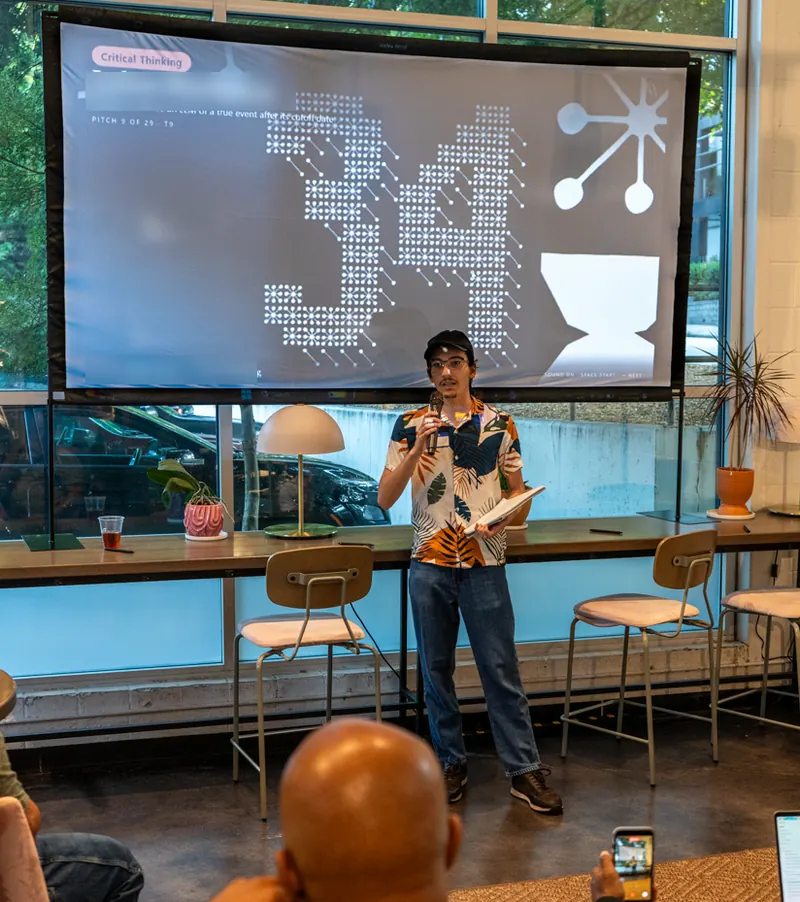
Pitch block
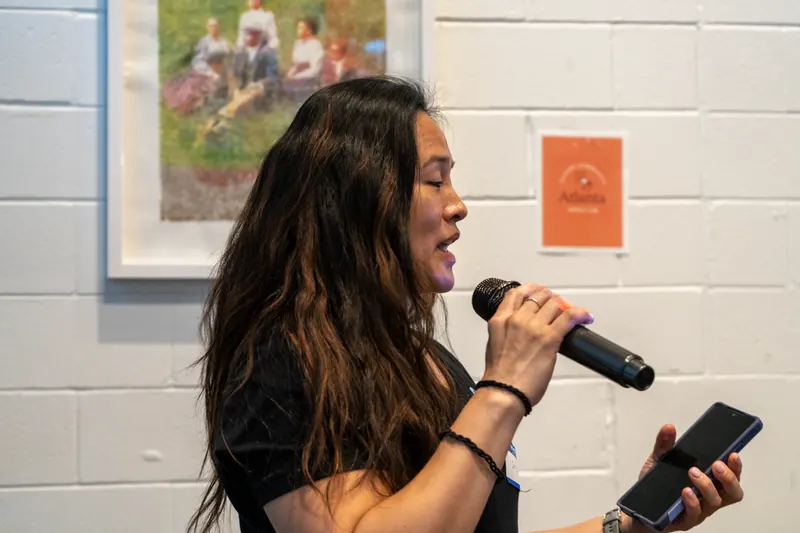
About 30 pitches, on the clock
Everyone who wanted the mic got it. People cared about the why behind what they wanted to build, not just the what, and the problems were broad enough that people seeing them for the first time at the door could still pitch against them.
-
Recap · Teams
Every pitch back on screen, then teams
Before anyone chose, a recap put every pitch back in front of the room. Then people who hadn't pitched joined ideas they liked, and pitchers with neighboring ideas merged into core teams.
-
Until 9:00 · Build
Teams start scoping
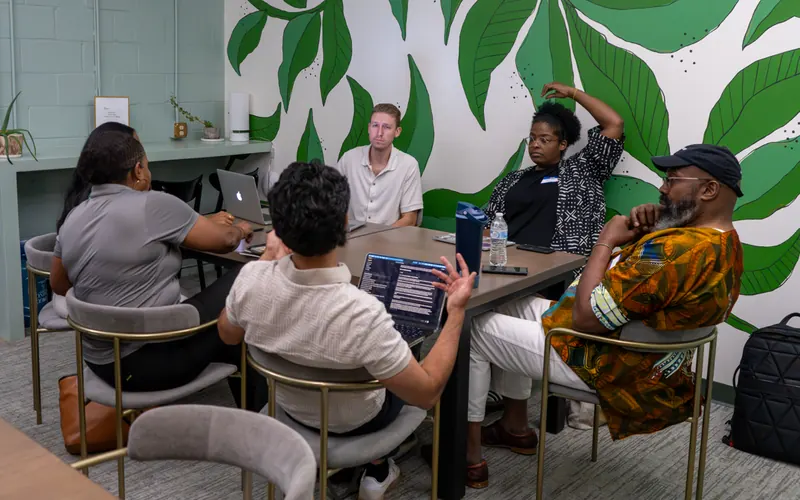
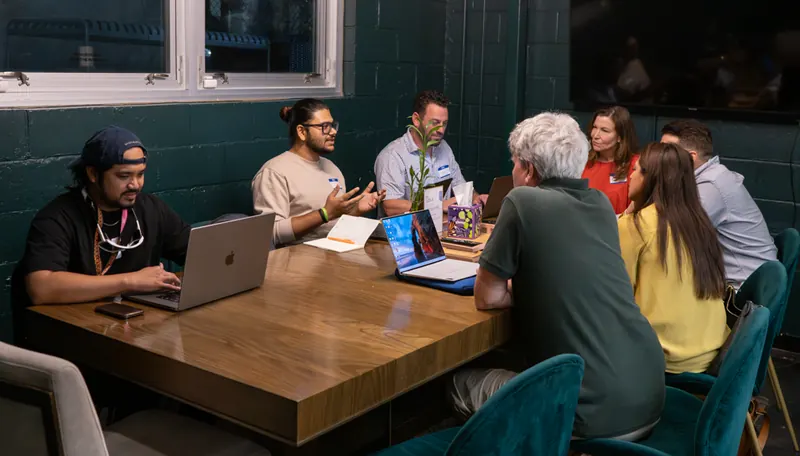
Teams spent the rest of the night getting to know each other, sharpening what to build, and starting to build.
A one-evening tool that ran the room.
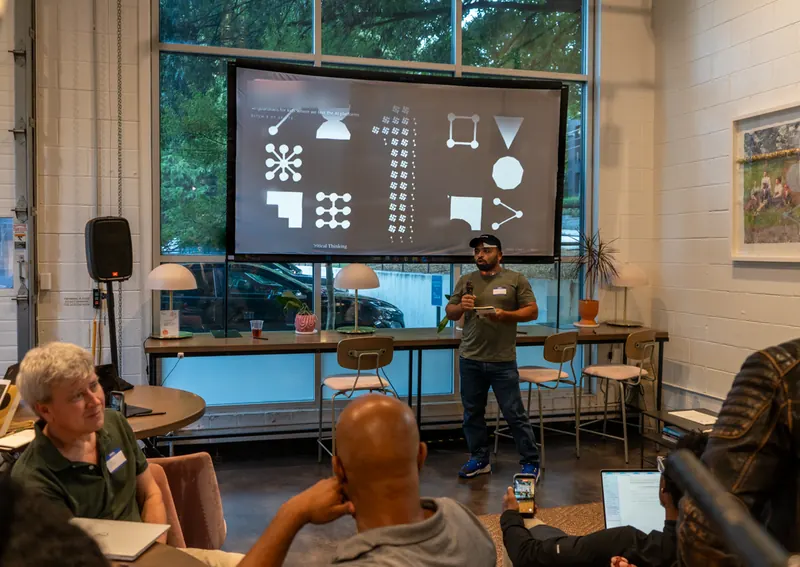
Nearly thirty one-minute pitches need a clock nobody argues with. Tyler built the screen around one: Anthropic's 60-second countdown video, with who was pitching, which problem they picked, and who was up next laid over it.
“Quite literally a one-shot prompt and some fine-tuning on the text.”Tyler Sztuka, host
It ran at the front of the room all night, and people kept asking how it was built, which made it a live demo of the event's own premise.
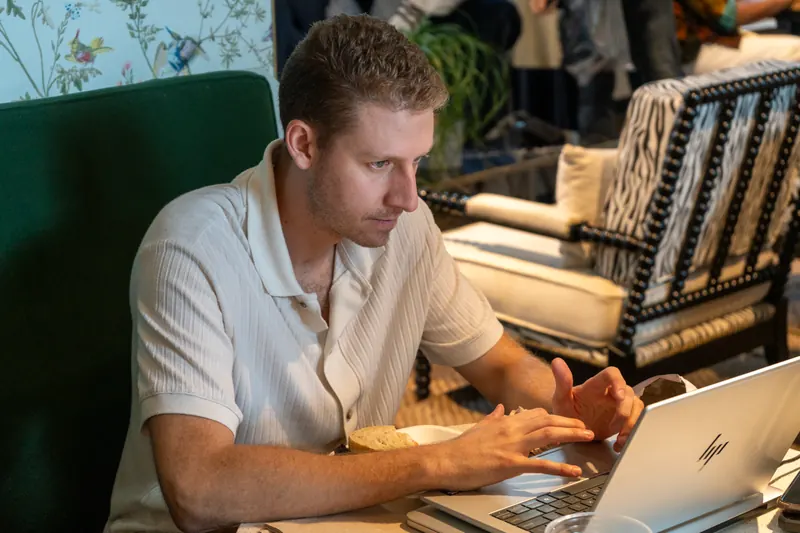
It's the cleanest example yet of what Tyler calls disposable software: a tool built for one evening, at almost no cost in time or tokens, that does a lot of work for that evening.
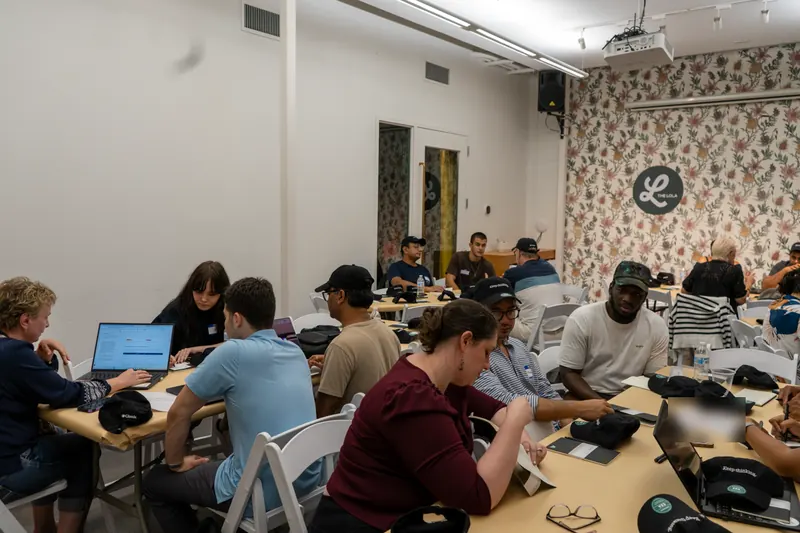
No herding required.
The plan carried a full set of rules for team formation: floaters to split big teams, merge small ones, and walk unattached people over. Almost none of it was needed. With every pitch recapped on screen and a zone for each problem, the room formed its own teams.
Notes for the next Impact Lab.
-
Cap the length, not the people
About 30 one-minute pitches worked because the countdown was visible, the same for everyone, and enforced from the first pitch.
-
Recap before you release the room
Putting every pitch back on screen before team formation kept the night from going to whoever pitched loudest or last.
-
Write problems people can pitch cold
Specific enough to aim at, broad enough to improvise inside. People who first saw them at the door pitched against them comfortably.
-
Share the display as a pattern
A countdown video on its own keeps time but can't show who's up, who's next, or which problem they're on. Any host with model access can generate a display like this for their own event.
-
Budget less machinery for teams
With a written menu of pitches and a recap, the room sorts itself. Design the recap and keep the enforcement rules as a backup.
What it looked like.
Want to be at the next one?
Claude Community Atlanta events are free and open to everyone. Upcoming events are posted on the Claude Community calendar.
This recap is published by SZD Labs, Tyler's company. Claude Community events are free and run through Anthropic's Claude Community program, where Tyler volunteers as Atlanta's ambassador. SZD Labs is independent and not affiliated with Anthropic. Claude is a trademark of Anthropic, PBC. If you're pictured and would like a photo removed, get in touch and it will come down.