Hands-on Claude training for your team.
SZD Labs runs hands-on corporate Claude training for executive and leadership teams, departments and engineering teams at small and mid-market companies, in person at your office in Atlanta or elsewhere in the Southeast. Leadership teams take one full day. The wider team takes three 3-hour working sessions about a week apart, or a single session on its own. Engineering teams take a half day to two days. Everyone works on their own machine with your own material, so every example is your work, not a demo.
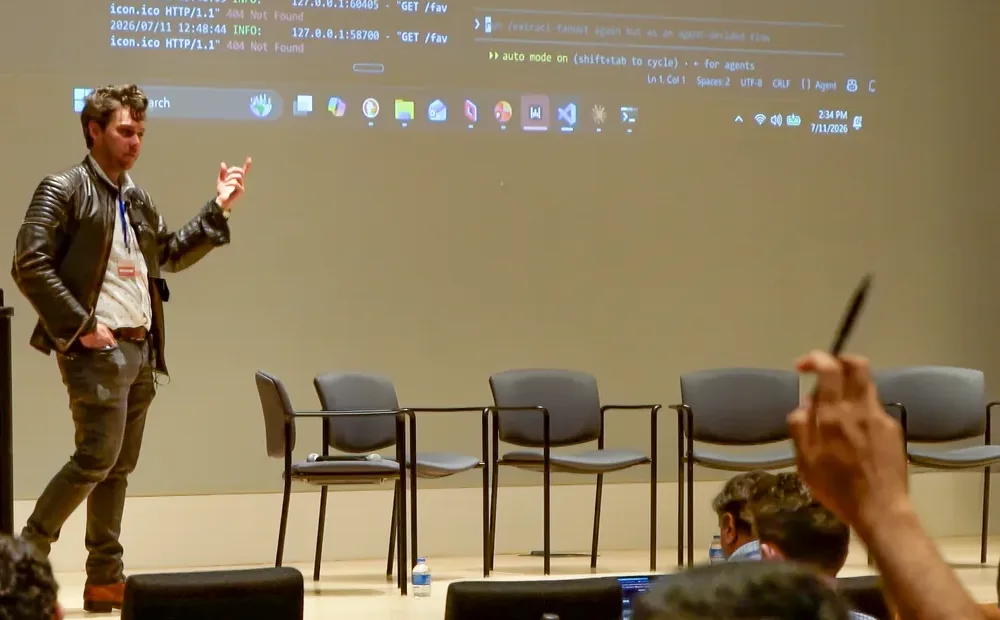
Tyler teaching at a free Claude Community workshop with IEEE Atlanta, held at Georgia Tech Research Institute, July 2026.

Three rooms, one rule: it runs on your work.
Every session is built around the people in it. Tell us who will be in the room and what they do all day, and the content follows.
The Comprehensive Workshop
One full day for a CEO, the leadership team and the few people who'll drive adoption: a working guide to Claude and Anthropic's tools, built on your company's own examples. It ends with a department roadmap and ground rules for the wider rollout.
The full day Teams & departmentsThe Working Sessions
Three 3-hour hands-on sessions, about a week apart, for the people who run the work: operations, finance, sales, marketing, estimating. Each team maps its own workflows, finds its own use cases and builds the best of them in the room.
How they run Engineering teamsAI-Driven Software Development
For developers and platform teams: the Claude Code harness, hard bounds and observability, and a two-day format in which your team takes a real epic from tickets to merged code.
The engineering trackThe Comprehensive Workshop.
One full day, on-site, for a CEO, the executive team and the few people who'll drive adoption: what Claude can do across the company, not just in one person's chat history, worked hands-on on your own material. The day is calibrated live: anything the room already knows gets a quick confirmation pass, and the time goes where the gaps are.
-
Fundamentals, at speed
What these models are and aren't, the working mental model, and where the boundaries sit, gauged against what the room already does.
-
Model selection and usage
Which Claude model fits which work, why defaulting everything to the biggest one burns through usage limits, and the habits that stop it. Everyone leaves with a one-page cheat sheet.
-
Structure over chat
Projects, custom instructions and Artifacts. Two or three of your recurring workflows are rebuilt as shared projects the next person can pick up, and the documents and spreadsheets you already pull out of Claude become Artifacts built to a standard.
-
Connectors, demystified
What each connector does, what you already have wired, what to connect next and what not to, where desktop tools like Cowork fit, and the data rules that go with all of it.
-
Agents and Claude Code, straight answers
What an agent is and isn't, when one is worth setting up versus a well-built project, and what Claude Code does that chat can't.
-
The department roadmap
Your functions mapped against everything covered, each with a verification step so the output can be trusted, then prioritized, with draft ground rules for the wider team: who can build what, usage budgets, and what data stays out.
You leave with
- A one-page model-selection cheat sheet the whole team can use, and the written decision framework
- Two or three of your team's real workflows rebuilt as shared projects, working before the day ends
- A prioritized department roadmap, written up and delivered within two business days
- A governance starter: the ground rules that make the wider rollout safe
The Working Sessions.
Three 3-hour hands-on sessions, about a week apart, for the people who do the work every day, most of whom have used a chatbot a few times and stopped there. Each session builds on the last, and the use cases come from the people in the room.
-
From AI Chat to Durable Work
What separates AI chat from desktop tools like Cowork, where what you type actually goes, and the mental model for spotting use cases in your own work. Live demos first; the back half is hands-on with real desk tasks: drafting replies, summarizing documents, pulling details out of PDFs, working in spreadsheets.
Everyone leaves with two or three routines they can run at their desk the next morning, and clear rules for what goes into these tools and what stays out.
-
Your Processes, Augmented
A share-out of what stuck from session one, then the core skill: breaking a workflow into steps and sorting the judgment calls that stay human from the mechanical steps AI can take. Each function maps a workflow it runs every week and builds a first automation against its most mechanical step, live. Every candidate goes on a use-case card, and the room sorts the cards: self-serve today, already covered by your existing platforms, or needs engineering.
The team leaves with a process map per function, the use-case cards, one working automation per group, and the prioritized shortlist in writing within two business days.
-
Build Day
Beforehand, the shortlist is cut to the workflows that can be stood up without engineering, with their owners in the room and real documents in hand. Each working group builds its workflow in your own environment, tests it against real examples, writes a one-page runbook and demos it to the room. Anything that needs engineering goes on a parked build list.
The team leaves with three to five workflows live in company accounts, each tested, documented and owned by a named person, plus the parked build list.

Hybrid, hands-on, built on the work.
For 5 to 25 people in the room, plus anyone joining by video from other sites. Every session is recorded, so anyone who misses a date can catch up.
- No prerequisites. Mixed rooms are the norm, from first-timers to daily users.
- Built on your stack: the documents, spreadsheets and systems your team already uses.
- Hands-on, on purpose. People on laptops, on their own work, with things breaking in front of everyone so they learn how to recover.
- After The Comprehensive Workshop, the sessions run on the roadmap's priorities and inside the ground rules leadership set.
- One session on its own: three hours for a team's first session, one department or one focused topic.
Claude Code and agents, past the demo.
For developers and platform teams already using AI tools who need the work to hold up in review. Two formats:
Beyond Prompting: building agents that actually work
What Claude Code actually is: a model looping toward a goal, on your machine, against your files, with a tool surface you control. When a fixed workflow beats an agent, and why prompt-based guardrails aren't real bounds.
Then the bounds that live outside the model: access, approval, budget and policy, with observability over all four, so you can always answer the question every manager asks: what did it change?
AI-Driven Development
Day one, the inner loop. Each person takes a guided ticket from research to code review, then builds their own rules files, a skill, a tested subagent and a hook.
Day two, the outer loop. Each team slices a real epic into tickets, runs them in parallel, merges working code, and folds one retro fix back into the setup.
Pick a format. Priced by format, not per head.
| Format | Length | What it covers |
|---|---|---|
| The Comprehensive Workshop | One full day | On-site, for the leadership team and the few people who'll drive adoption. Six modules on your own examples, ending in a department roadmap and a governance starter. |
| The Working Sessions | Three sessions, 3 hours each | About a week apart, hybrid, for 5 to 25 people in the room plus remote attendees: AI chat to durable work, then your processes mapped, then a Build Day that puts workflows live in company accounts. |
| Single working session | 3 hours | Run on its own: a team's first session, one department or one focused topic, hands-on with the team's own work. |
| Beyond Prompting | Half or full day | Claude Code and agents for engineering teams, with hard bounds and observability. |
| AI-Driven Development | Two days | Engineering teams of 4 to 8, up to four teams, take a real epic from tickets to merged code. |
Team sessions work best for 5 to 25 people in the room, and the price doesn't change with headcount inside that range. Larger groups run as split sessions. The two-day engineering workshop is priced by the number of teams instead. Every format includes a one-hour planning call, except the two-day engineering workshop, which includes a readiness check instead. Leadership and team formats also include the worksheets, the decision framework and full recordings of every session. Sessions usually book about four weeks out.
From first call to Monday morning.
Intro call
Thirty minutes: who's in the room, what they use today, and what you want them doing differently.
Proposal
A fixed price, in writing, with dates.
Planning call
One hour, included, the week before, with whoever owns the outcome. We pick the real material the session runs on. The two-day engineering workshop has a readiness check instead.
The session
On laptops, on your work, calibrated to the room as it goes.
Follow-up
After The Comprehensive Workshop or the Working Sessions, the written roadmap or use-case shortlist within two business days. Builds are scoped separately, in writing.
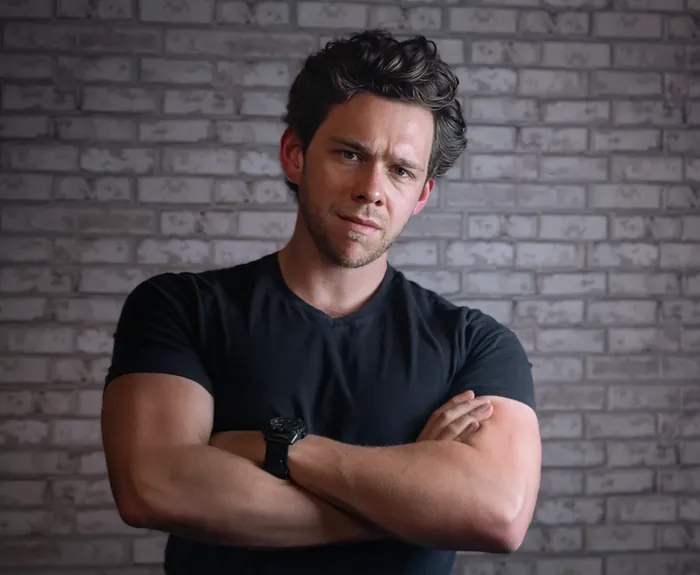
Tyler Sztuka.
Tyler founded SZD Labs and leads every session. He builds with Claude every day, and he shows things working before he says they're possible.
- 8 free Claude Community Atlanta events hosted as a volunteer since March 2026, with 840 registrations, including the Claude Impact Lab
- Among them, about 100 practitioners at a 90-minute Claude Code workshop with IEEE Atlanta at Georgia Tech Research Institute (July 2026), and 250 registered, 200+ in the room at a Claude Code workshop for college builders (April 2026)
- Talks at the BIT Atlanta 404 Tech Summit and Claude for Creatives, September 2026
Tyler volunteers as Atlanta's Claude Community Ambassador. Those community events are free, open to everyone, and separate from SZD Labs' paid training. SZD Labs is independent and not affiliated with Anthropic.
Questions people ask first.
What does Claude training from SZD Labs cover?
How to use Claude on your team's real work: choosing the right model, Projects and custom instructions, Artifacts, connectors, Cowork, where agents and Claude Code fit, and how to see where AI belongs in a process. Engineering sessions go deep on Claude Code, agents and the controls that make them safe to run. Every session is built on your own material.
Who is it for?
Executive and leadership teams, departments and engineering teams at small and mid-market companies. Most rooms are mixed, and the most common starting point is people who have used a chatbot a few times and stopped there.
How long is a session, and how many people can attend?
The Comprehensive Workshop is one full day for a leadership team. The Working Sessions are three 3-hour sessions about a week apart, and a single 3-hour session can run on its own; sessions start at three hours. Team sessions work best for 5 to 25 people in the room, plus anyone joining remotely. For engineering teams, Beyond Prompting runs a half or full day, and the two-day AI-Driven Development workshop takes up to four teams of 4 to 8.
Do you offer Claude Code training for engineering teams?
Yes. Engineering teams can take Beyond Prompting, a half-day or full-day session on Claude Code, agents and the controls that make them safe to run, or AI-Driven Development, a two-day workshop in which teams take a real epic from tickets to merged code.
Do you come to our office?
Yes. Sessions run in person at your site, across metro Atlanta and the Southeast, including Georgia, Tennessee, Alabama, North Carolina and Florida, and other sites can join the Working Sessions by video. Travel beyond metro Atlanta is billed separately.
Do we need a particular Claude plan?
Hands-on attendees need a paid Claude plan, because Cowork and Claude Code aren't on the free plan, and the engineering workshop needs Claude Code access for every attendee. Beyond that, sessions are built around the plan your team already has. If you haven't chosen one yet, the intro call covers which plan fits.
How much does it cost?
Each format has a fixed price, quoted in writing after the intro call. Headcount doesn't change it, so anything from 5 to 25 people costs the same; the two-day engineering workshop is priced by the number of teams. Travel beyond metro Atlanta is billed separately.
How far ahead do we need to book?
Sessions usually book about four weeks out, which leaves time for the planning call the week before and for building examples from your material.
What happens after the session?
You keep everything the sessions produced. Leadership and team formats include full recordings. The Comprehensive Workshop and the Working Sessions add the written department roadmap or use-case shortlist within two business days, and the Build Day leaves its workflows running in your accounts, each with a runbook and an owner. Engineering teams keep the rules files, skills, subagents and hooks they built. Ongoing questions are covered by an optional monthly advisory engagement, and any builds are scoped separately, in writing.
Is SZD Labs part of Anthropic?
No. SZD Labs is an independent company. Tyler also volunteers as Atlanta's Claude Community Ambassador, hosting free community events through Anthropic's Claude Community program. Those events are separate from SZD Labs' paid training.
Tell us who's in the room.
Thirty minutes is enough to say which format fits, what it would cover, and when it could run.
SZD Labs is independent and not affiliated with Anthropic. Claude is a trademark of Anthropic, PBC. Looking for the free community workshops instead? They're on the Claude Community Atlanta page.